CinQ Website
A complete marketing platform and custom PHP application portal
[!SUMMARY]
Languages PHP, JavaScript, Bash, HTML, CSS Tech stack Statamic, Laravel, Tailwind, Alpine.js, Vite, Guzzle Skillset Systems Architecture, Backend Dev, UI/UX
Context
The web presence for CinQ operates as a two-sided ecosystem.
- The Marketing Platform (playcinq.com):
A dynamic, multilingual storefront and content hub built on Statamic. - The Application Portal (account.playcinq.com):
A fully custom, hand-written PHP backend where users manage their game clients, accounts, and performance scorecards.
Over the years, I have built over a dozen sites and dedicated landing
pages for Disruptive Learning Solutions. All have since been replaced by
one central site at playcinq.com.
Early versions were built using a mix of static HTML and WordPress, but
I have since transitioned it over to a stable and highly automated
infrastructure built using Statamic and modern PHP. This shift has
provided absolute control over the codebase, resulting in exponential
improvements in page speed, security, and developer experience.
While
I recognize the value of WordPress, I have become totally enamored with
the development that Statamic affords.
UX & Visual Design: Bridging Two Worlds
The primary design challenge around CinQ has always been creating a visual identity that fits within the comfort zone of HR professionals and L&D executives, while still reflecting the modern, interactive nature of our gaming technology.
- The Marketing Front-End:
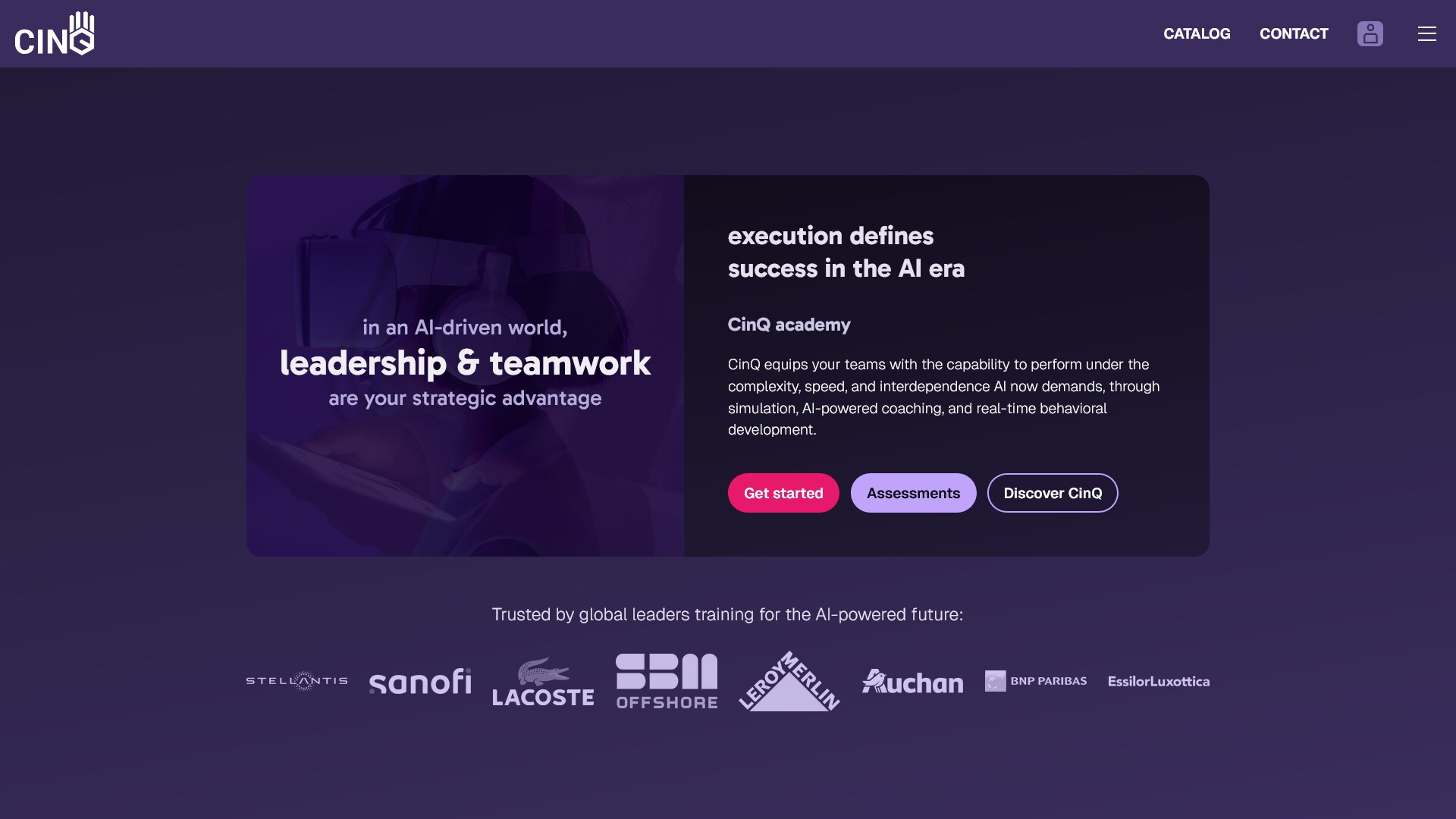
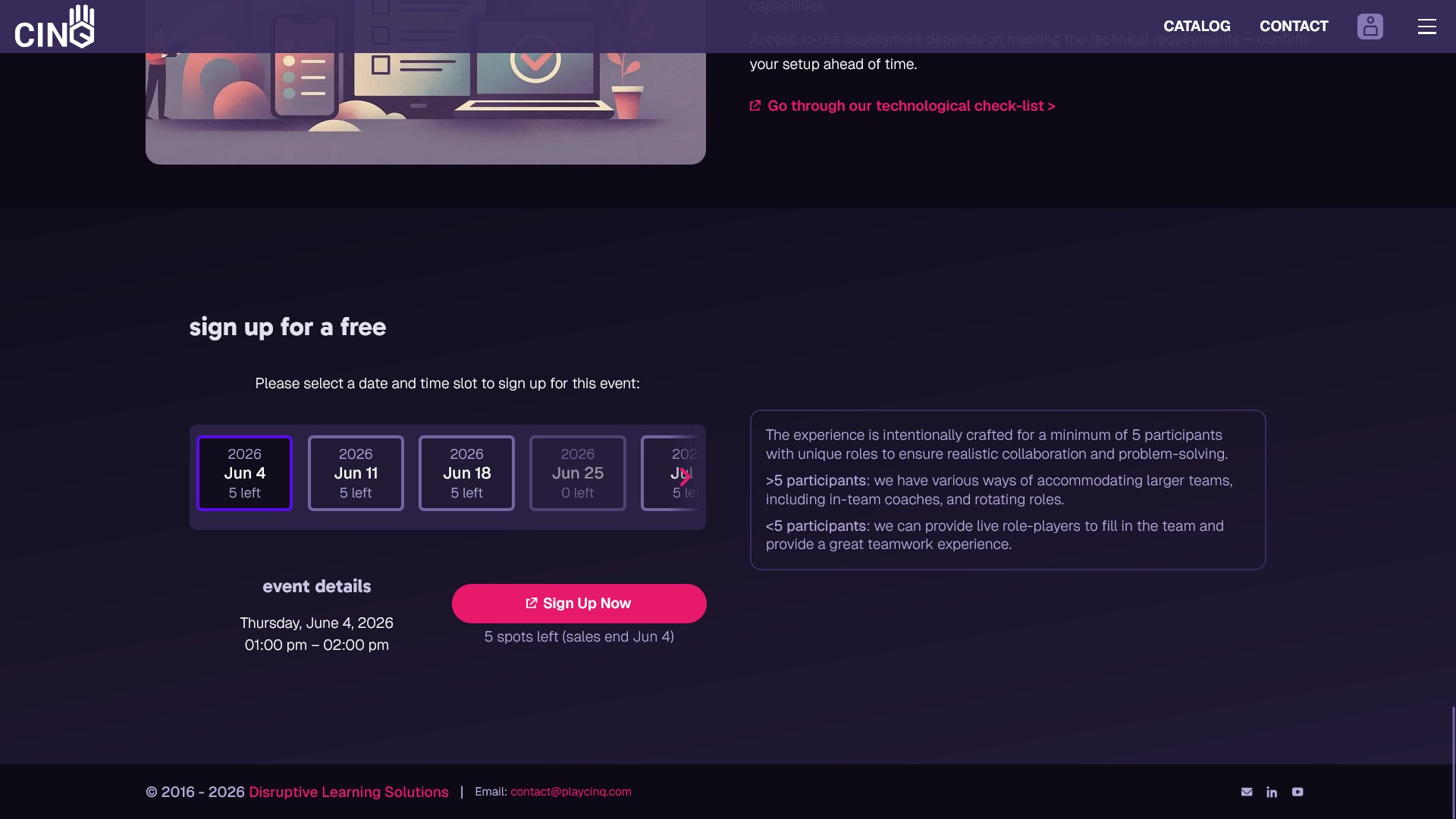
Since this is the main online presence for CinQ, I aimed for a blend between standard "tech-corporate" aesthetics (minimal responsive design, flat illustrations, familiar layouts) and something more "crunchy" that could subtly draw from the world of gaming and new technologies.
This meant avoiding the traditional navy-and-white of corporate services, opting for a dark-mode purple background with off-white text, offset by raspberry accents, grainy gradients, clean sans-serif typography, and rounded containers.
I put particular care into creating a strong brand identity, including the color palette, recurring shapes and textures, and strict typography (such as how all titles are lowercased across the whole site). This has since been extended to all our marketing material, slide decks, and various visual elements across all of the team's activity.
| Gallery | |
|---|---|
 |
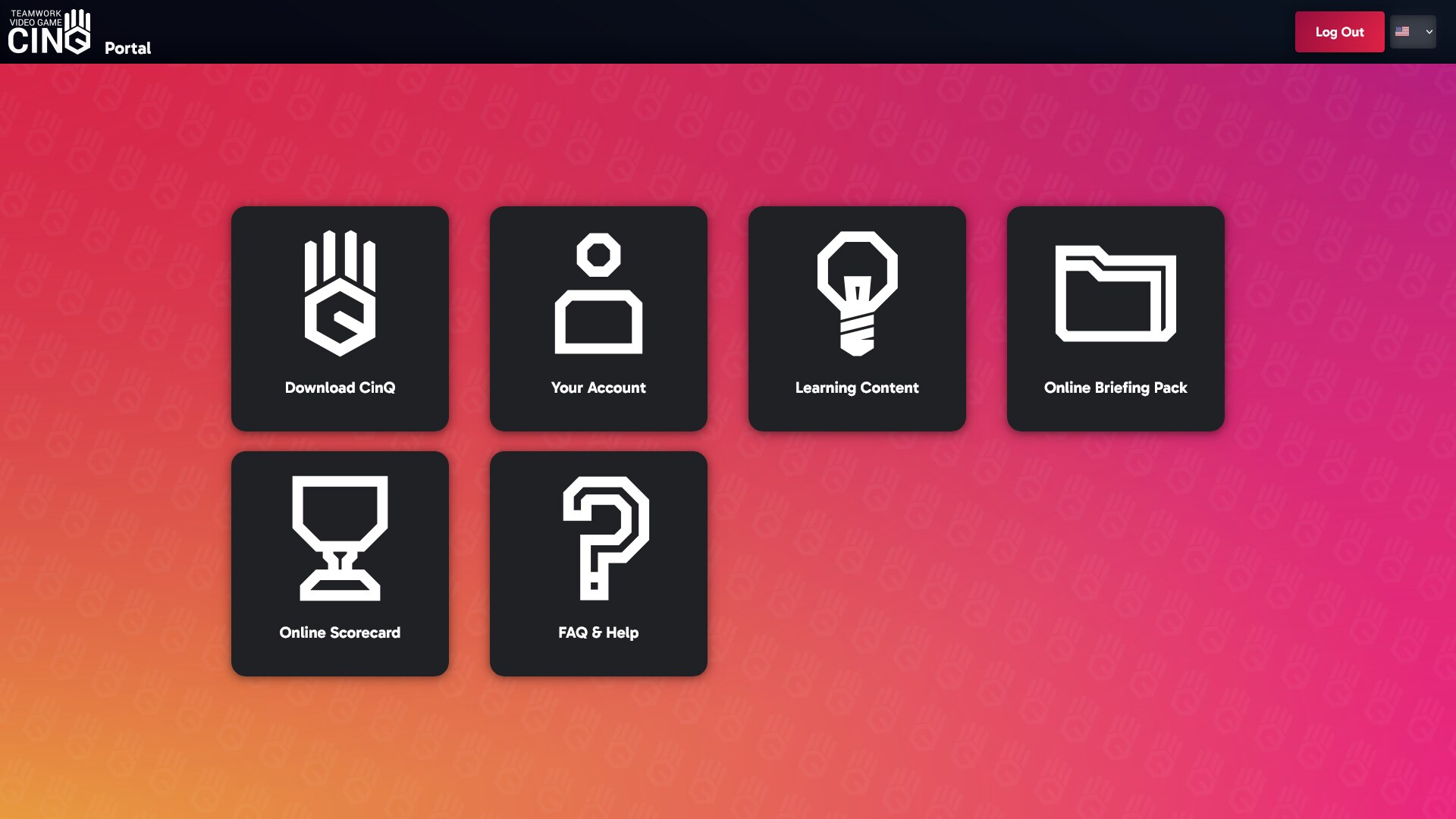 |
- The Application Dashboard:
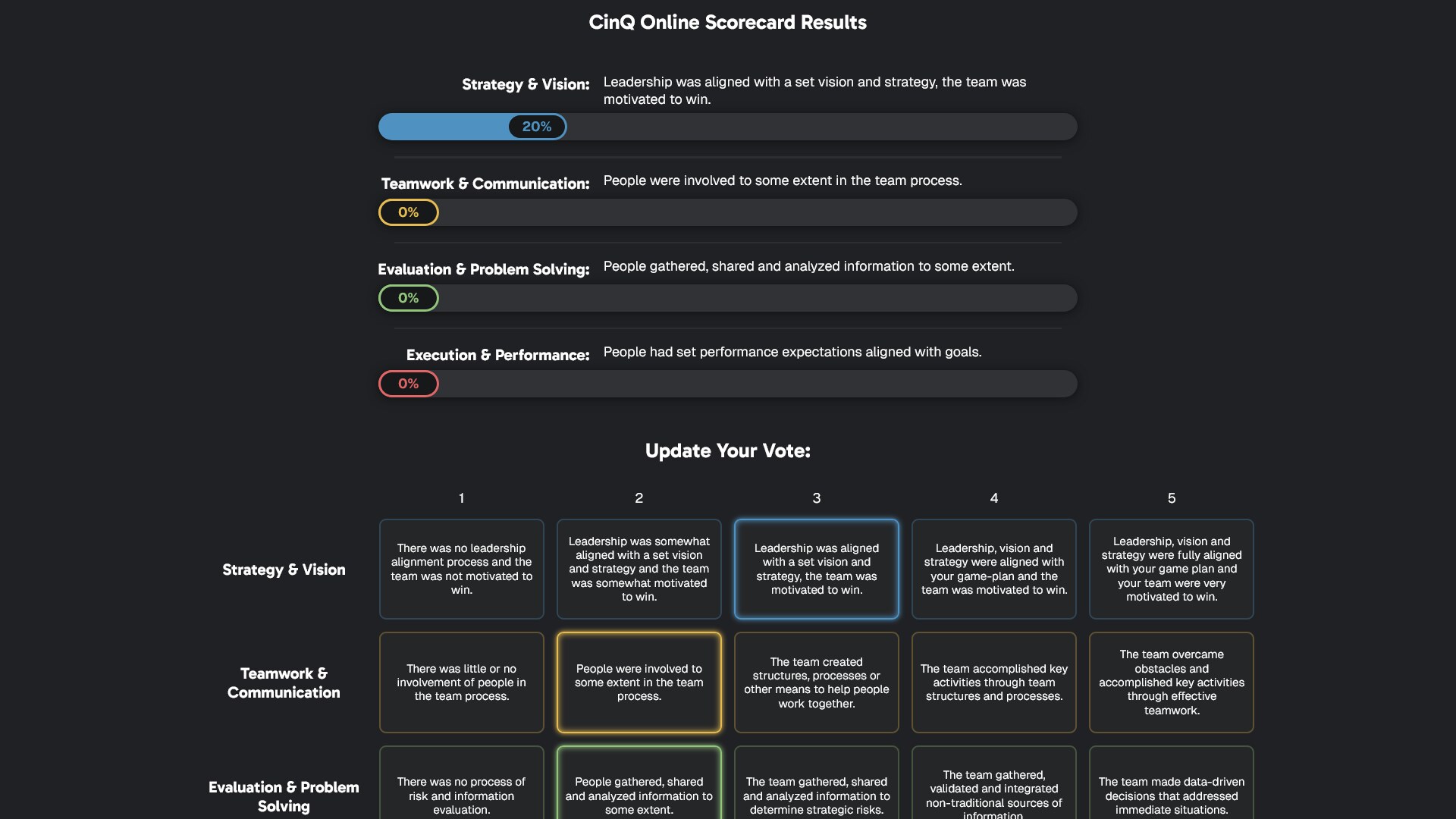
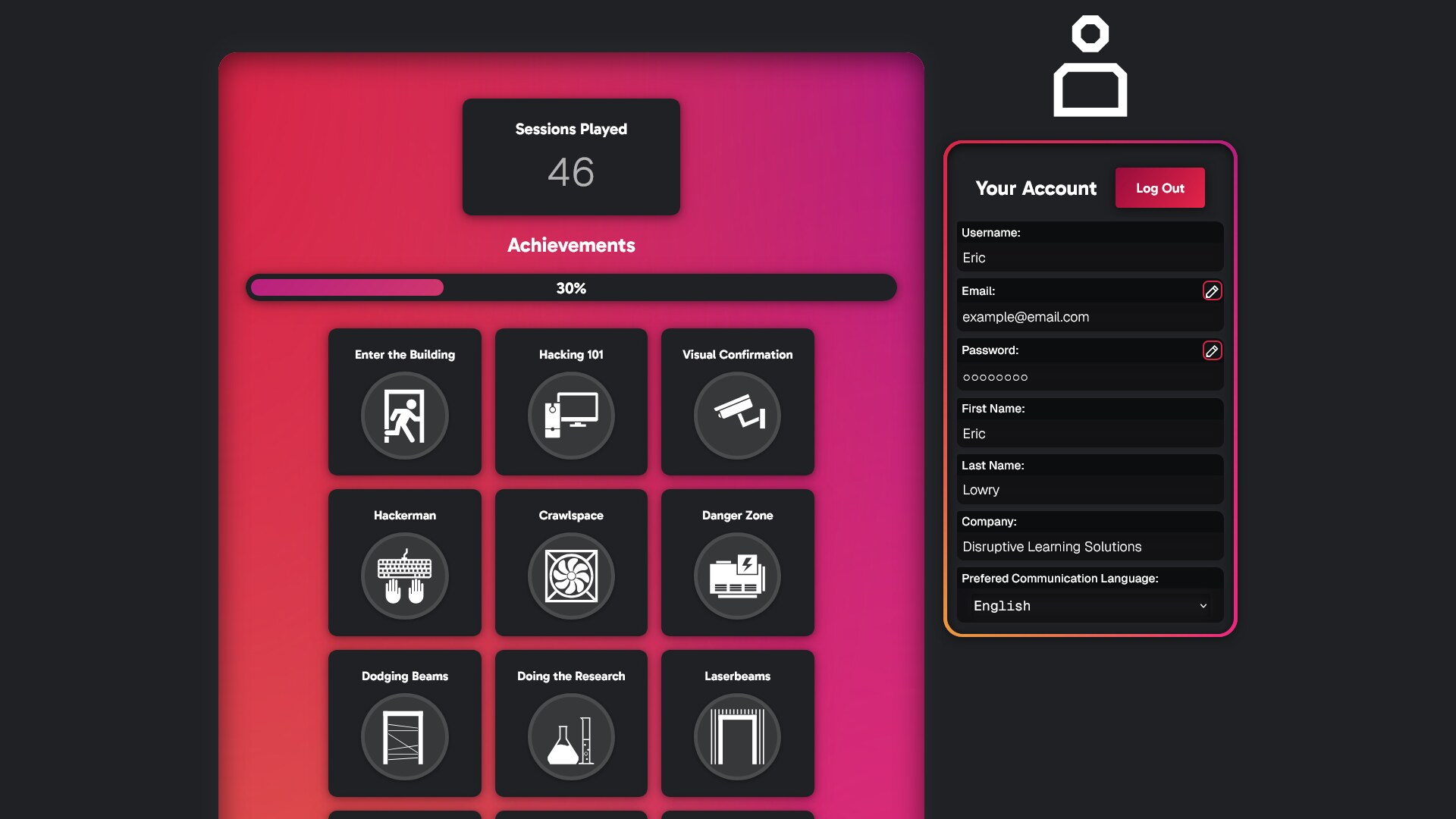
Aiming for familiarity and ease-of-use, the user portal was constructed to function as a typical minimalist, mobile-friendly corporate backend. However, to prevent it from being just another rigid backend, its visuals lean more toward the design language of CinQ itself, and I picked a striking red-pink-and-orange background with dark gray content boxes. This contrast makes it visually exciting and intriguing while prioritizing obvious controls and direct information hierarchies in its UX to ensure it would be a good fit for non-technical users.
The Marketing Workflow (Statamic & automation)
Transitioning to Statamic (powered by Laravel) allowed me to move past a simple static corporate site and instead create a highly automated digital storefront.
| Gallery: | |||
|---|---|---|---|
 |
 |
 |
 |
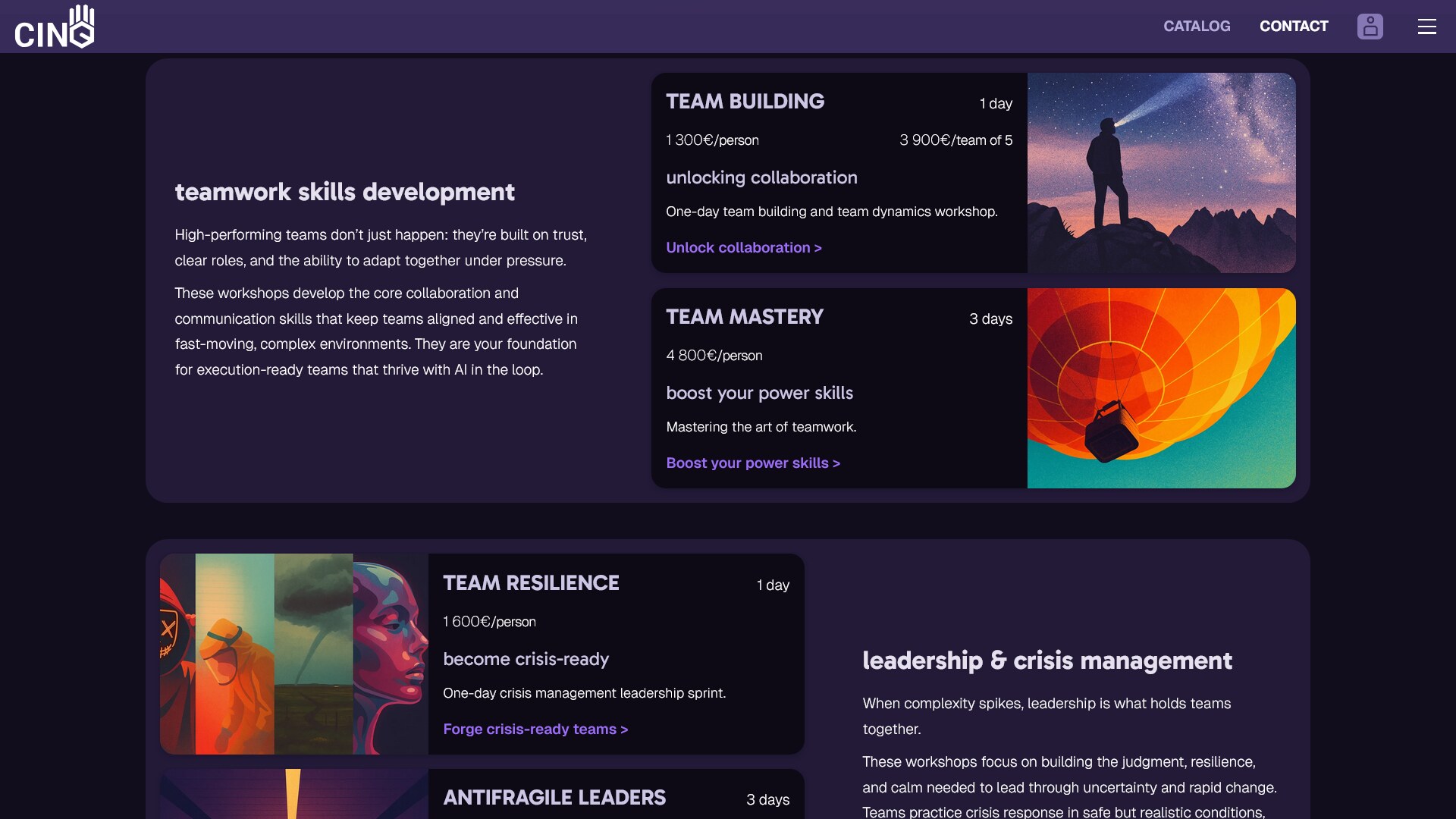
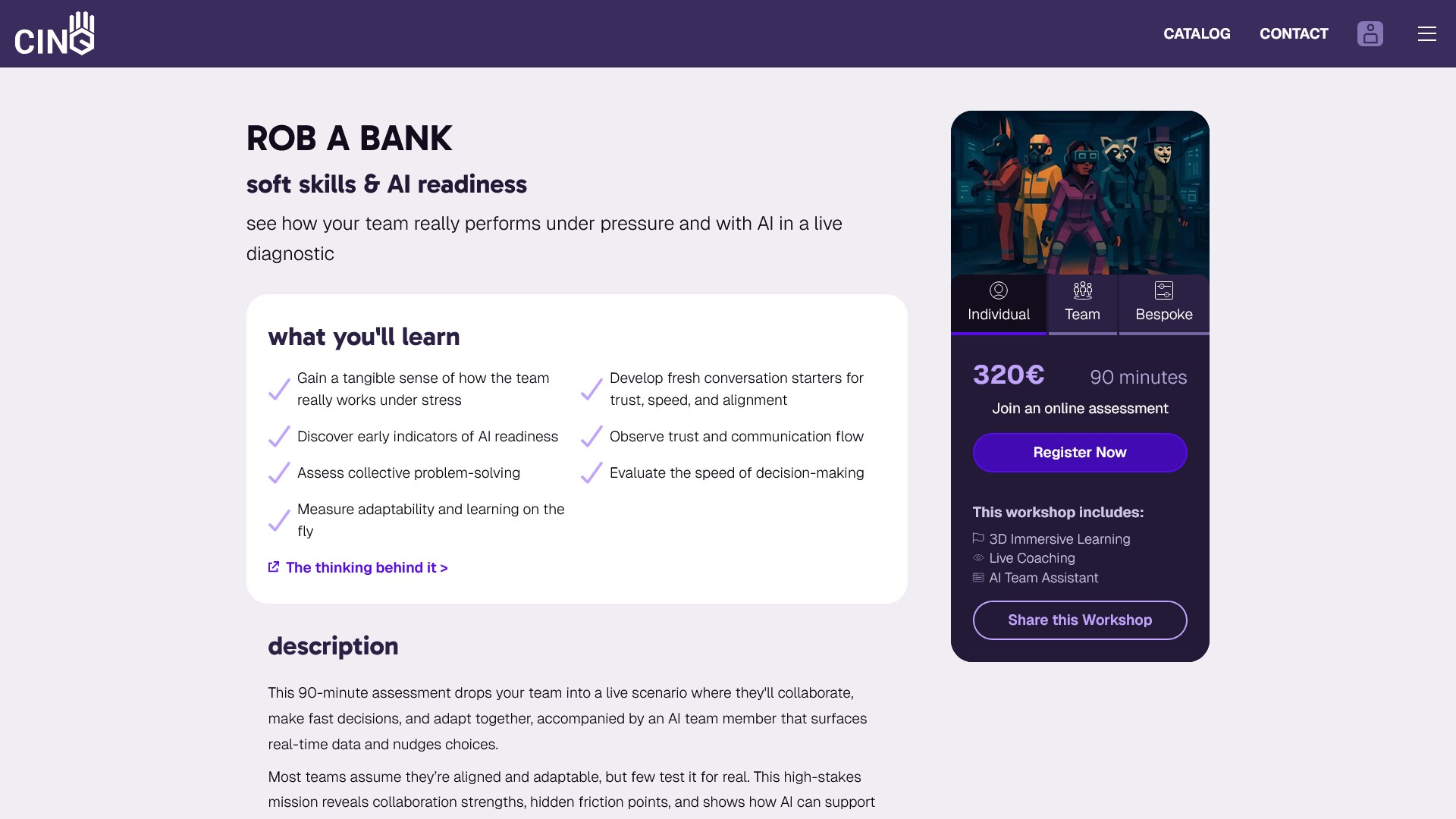
- Data Scraping & Live Workshops Catalog:
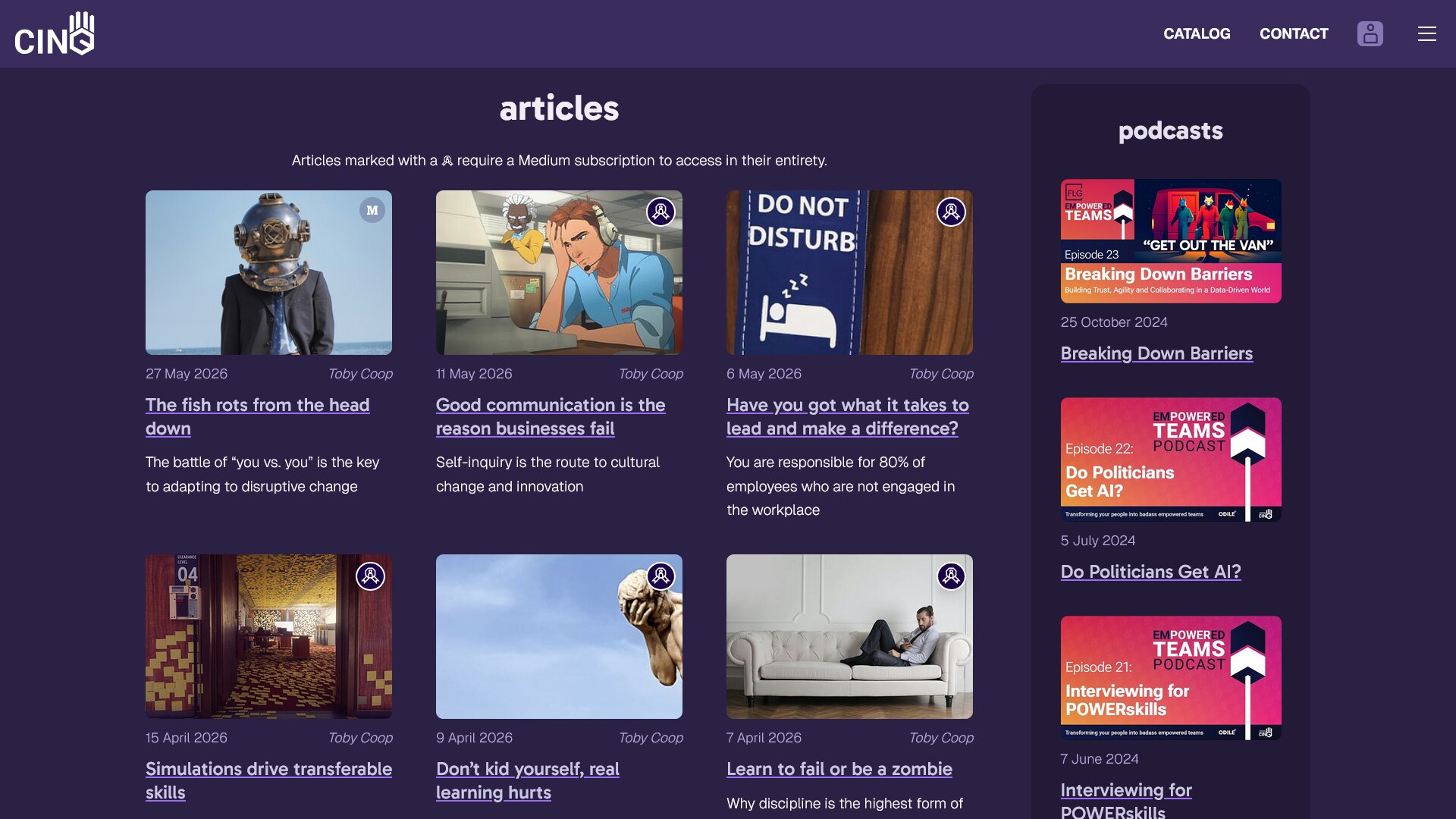
Instead of manually updating workshops or relying on heavy client-side JavaScript, I made use of Laravel's capabilities and task scheduling to have the server routinely scrape the Eventbrite API, Medium RSS feeds, YouTube, etc., automatically parsing relevant data into native Statamic collections.
This enables the whole site to serve as a central repository for all of our marketing content, articles, podcast, and workshops calendar, without needing to build dedicated systems where we already had existing workflows and platforms in use. - Discord Integration:
Our team used Discord as our internal communication tool, which was a great opportunity to integrate webhooks deeply into the site's logic.
The team receives automated Discord alerts for contact form submissions, new workshop sign-ups, and whenever content is updated in the CMS, all sorted and set up specifically to target the right team member(s).
This has also been a great tool for monitoring the site's git flow, overall health, and sending alerts regarding outstanding actions that result from the automated content updates.
CI/CD Multilingual Architecture
To manage a fully bilingual site (English/French) without relying on paid multi-site plugins, I engineered a decoupled multi-repository Git architecture that best fit the site's specific needs.
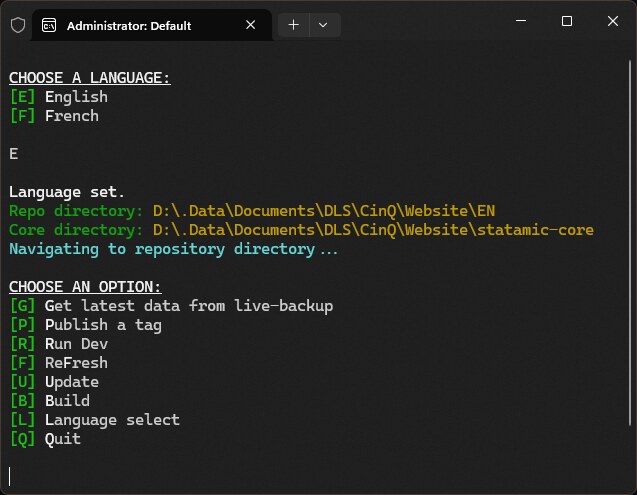
Specifically, I have split the site into a shared "core" repository (framework, config, theme) and dedicated content repositories for each language. This is then automated and managed by a custom suite of automated tools that I developed from scratch:
- Local CLI Management:
A custom Windows interactive CLI script manages local Vite dev servers, syncs language contexts, and pipes package updates through an AI generator to draft automated commit summaries. - Zero-Downtime Deployments:
Server cron jobs actively monitor remote branches for new semantic version tags. When an update is detected, the server locks the file system, drops into maintenance mode, executes a snapshot database backup, pulls the updated core and content repos, compiles production assets via NPM/Composer, and actively crawls the site to warm the static cache before reopening it to the public.
In practice this means updates can be pushed to the site without any need for manual intervention; any errors or warnings are automatically sent to the team Discord. - Automated Syncing:
Content modifications made directly in the live Statamic control panel by colleagues are automatically committed and pushed back to the Git repositories on a dedicated branch, ensuring that the remote repos and live database never fall out of sync and letting me validate any changes to ensure the site never gets broken.
The Custom PHP Application Portal
I built account.playcinq.com as a fully custom PHP application to handle all user accounts, workshop groups, and scorecard generation.
| Gallery | |
|---|---|
 |
 |
Because the portal interfaces directly with the Unity3D game, the major architectural constraint was ensuring web data and game data synced flawlessly via a REST API. For strict security, user credentials and gameplay data are isolated in separate databases. To handle this, I engineered a system utilizing Guzzle to chain API requests intelligently, often splitting a single frontend action into 3 or 4 secure, progressive backend requests to compile the correct dataset.
I opted to write this site by hand both to re-train my PHP backend coding skills and to maximize control over the portal's systems and security. I actively avoided heavy third-party libraries, opting to build the authentication, session management, and routing structures from scratch.
Outcomes & The Bigger Picture
Ultimately, building these two sites was an invaluable learning experience. It allowed me to explore the use of Statamic, flex my front-end design muscles, work on backend PHP and Laravel automation, and become deeply familiar with web server automation and management.